
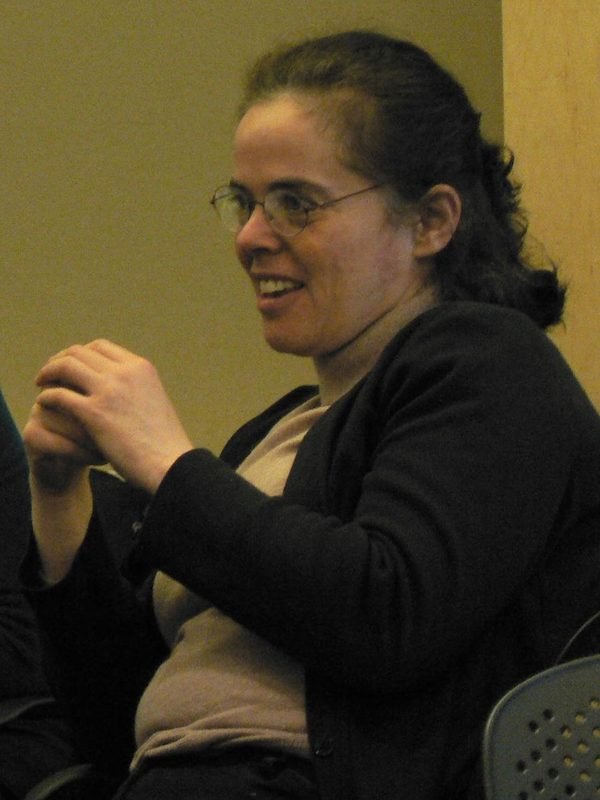
Photo: Marc Smith, CC BY-SA 2.0, Wikimedia Commons
Éva Tardos
Cornell University
- Research field
- Algorithmic game theory, network routing, and the price of anarchy
Éva Tardos and Tim Roughgarden asked how far the total travel time at equilibrium, where every driver picks the route that is fastest for them, can exceed the best possible routing. For networks whose travel times grow linearly with traffic the answer is at most four thirds, and Pigou's two-road example reaches the bound. With other travel time functions the loss can be unbounded, but the equilibrium never costs more than the best routing of twice the traffic, so the shape of the travel time function matters more than the shape of the network. The unit derives the bound of 4/3 for Pigou's example and states the general theorem.
In the masterclass
The spotlight follows Section 4 on Braess's paradox and the price of anarchy, after the worked example on real road networks.
The research is presented in Unit 8: The Reach of Game Theory, in a research spotlight box that explains the result at the level of the unit and links it to what you have just learned.